Pinpoint's approach to AI

Our approach to AI in hiring

AI in hiring only delivers when the data underneath it is complete, and the data only stays complete when everyone actually uses the system. This page lays out how we think about that, and what it means for building AI you can trust with a hiring decision.

pinpoint approach to ai, ai example
The thesis

AI in hiring is only as good as the data that powers it

Most ATSs fit one shape of hiring well. The teams that shape doesn't fit end up working around the system instead of in it, keeping their own spreadsheets, running a separate tool for the deskless roles, moving the senior hires along over email.

By the time AI shows up, it's working from whatever made it into the system, which tends to be the easy half of the story and not the part where the hard judgment calls happened. People treat that as as an AI problem. It's a data problem, and the data problem comes down to a simpler question: does everyone actually use the system?

Getting there takes three things at once. The system has to be flexible enough to handle every kind of hiring you do, give you the controls to ensure consistency and compliance when it's needed, and stay easy enough that recruiters, hiring managers, and candidates reach for it instead of around it.

When all three hold, people use it. When people use it, the record stays complete, and a complete record is what lets AI work on the actual hiring story. Most ATSs manage one or two of the three. Pinpoint was built for all three at once.

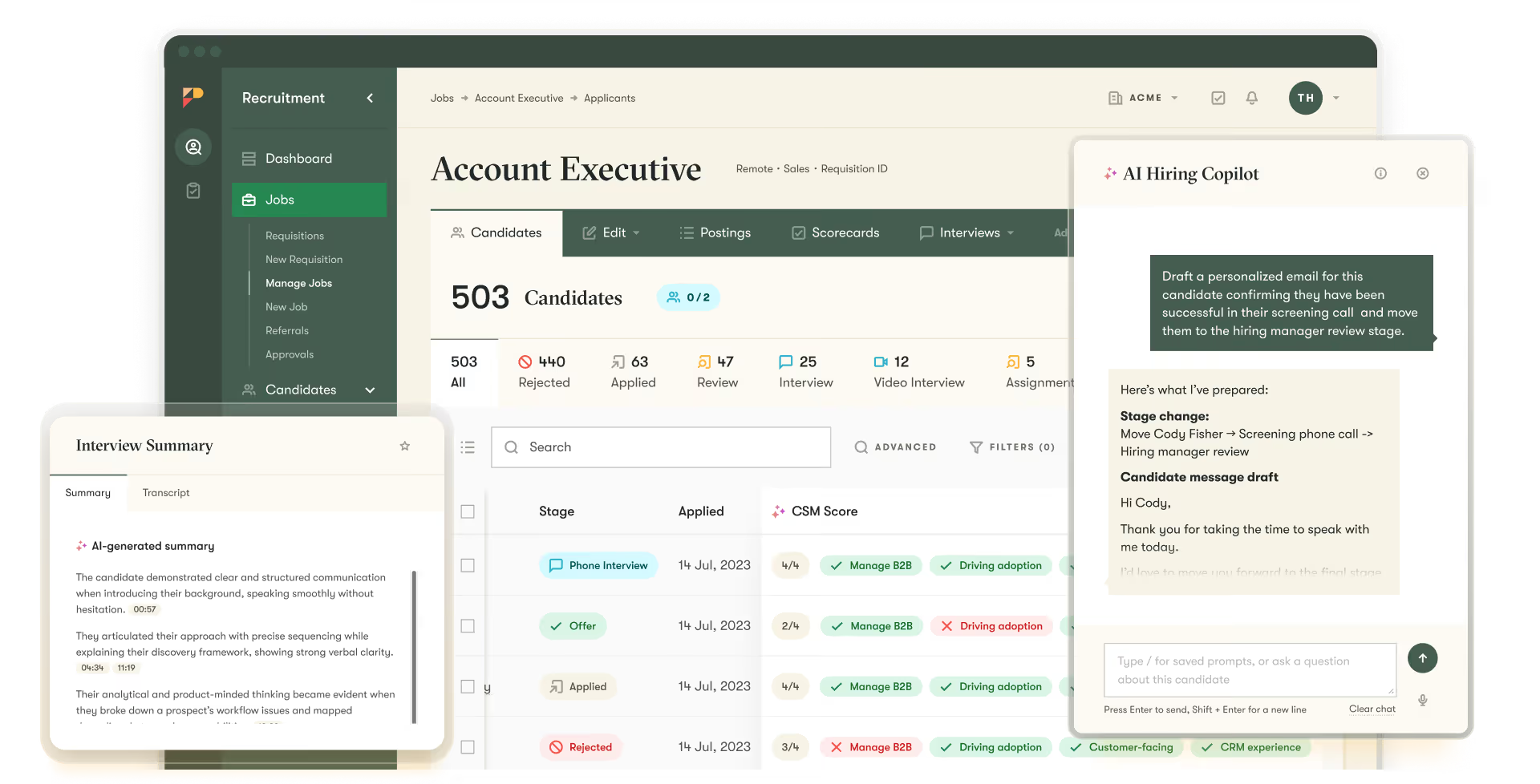
pinpoint ats ui example of ai hiring copilot in the platform to help make hiring easier

“Pinpoint isn't just another ATS with AI. Pinpoint has invested heavily in creating the conditions under which automation and AI deliver.”

Tom Hacquoil
CEO, Pinpoint
Direction

Where AI in Pinpoint is heading

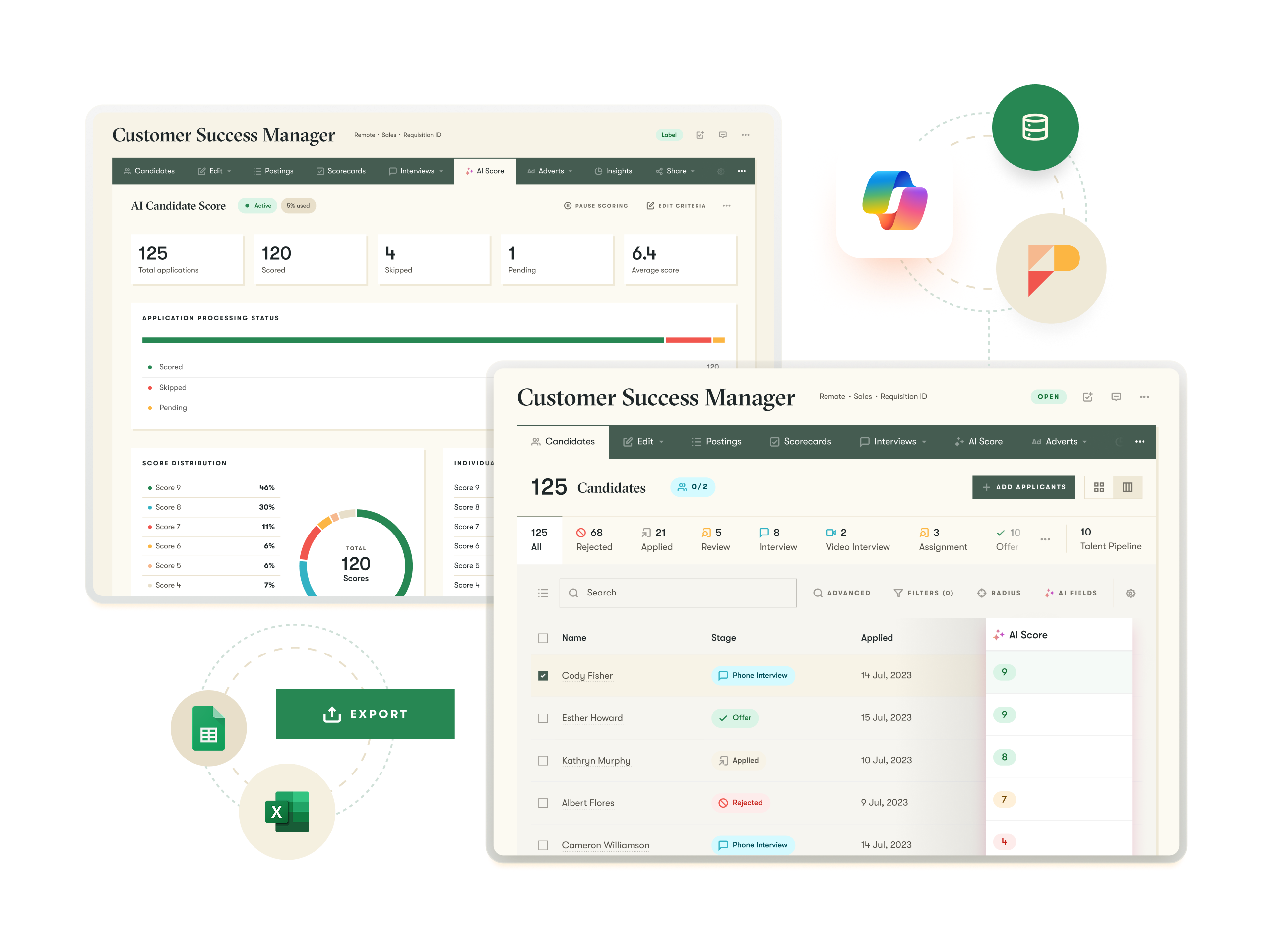
Pinpoint is already moving from an ATS with AI features toward one where AI enables to to work wherever you work: inside Pinpoint or inside the assistants you use in your day-to-day work like Microsoft Copilot, Claude, Gemini, and ChatGPT.

From there it gets more active, with Pinpoint handling more in the background, surfacing the candidates that need attention and drafting the next step for you to approve without prompting.

Further out, you'll be able to hand it whole sections of your hiring process, with approval checkpoints along the way. What doesn't change is that as AI takes on more of the work, the decision making remains yours.

pinpoint ats ui example of ai hiring copilot in the platform to help make hiring easier

The principles we design against

AI surfaces the insight, people make the call

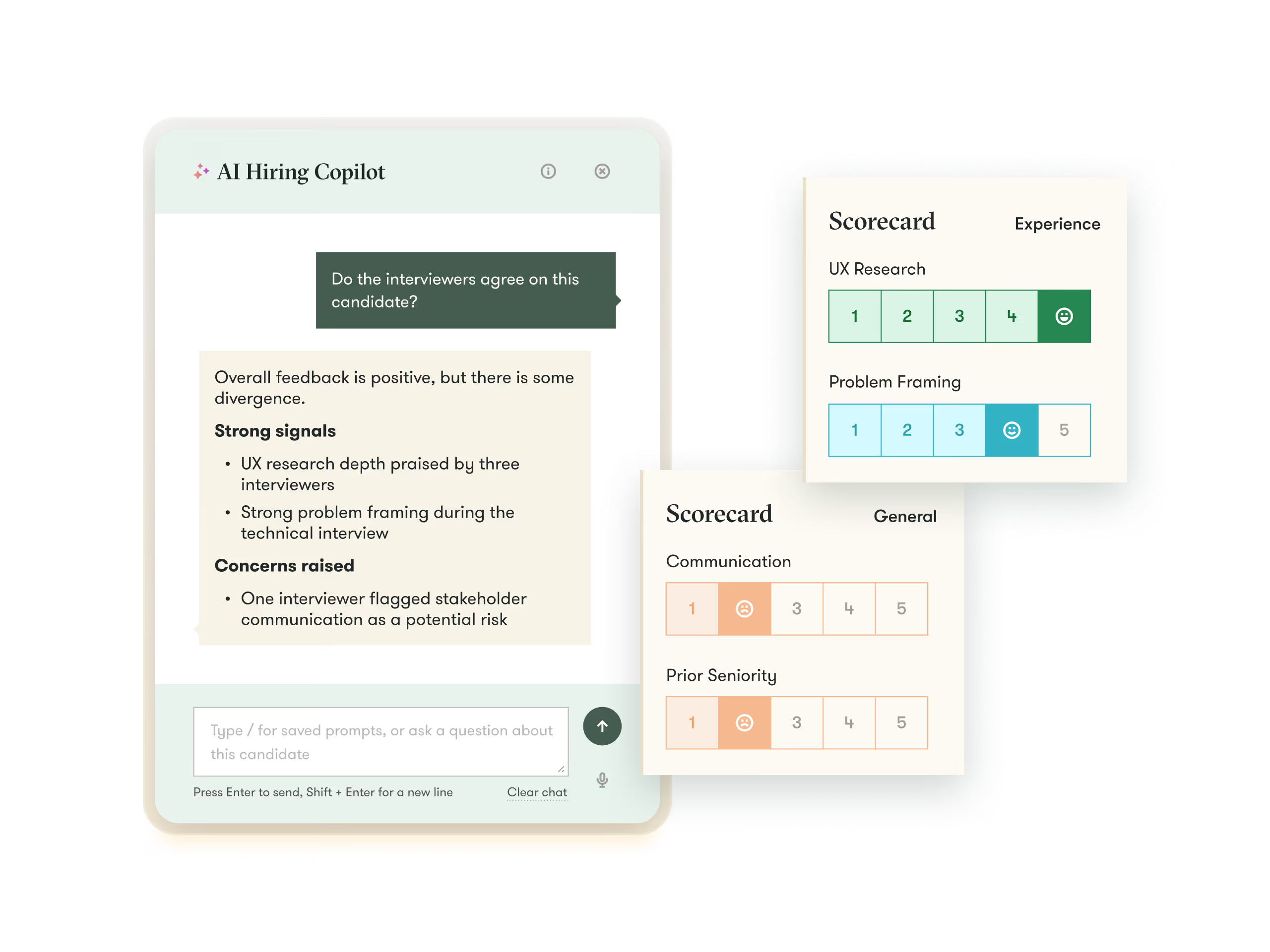
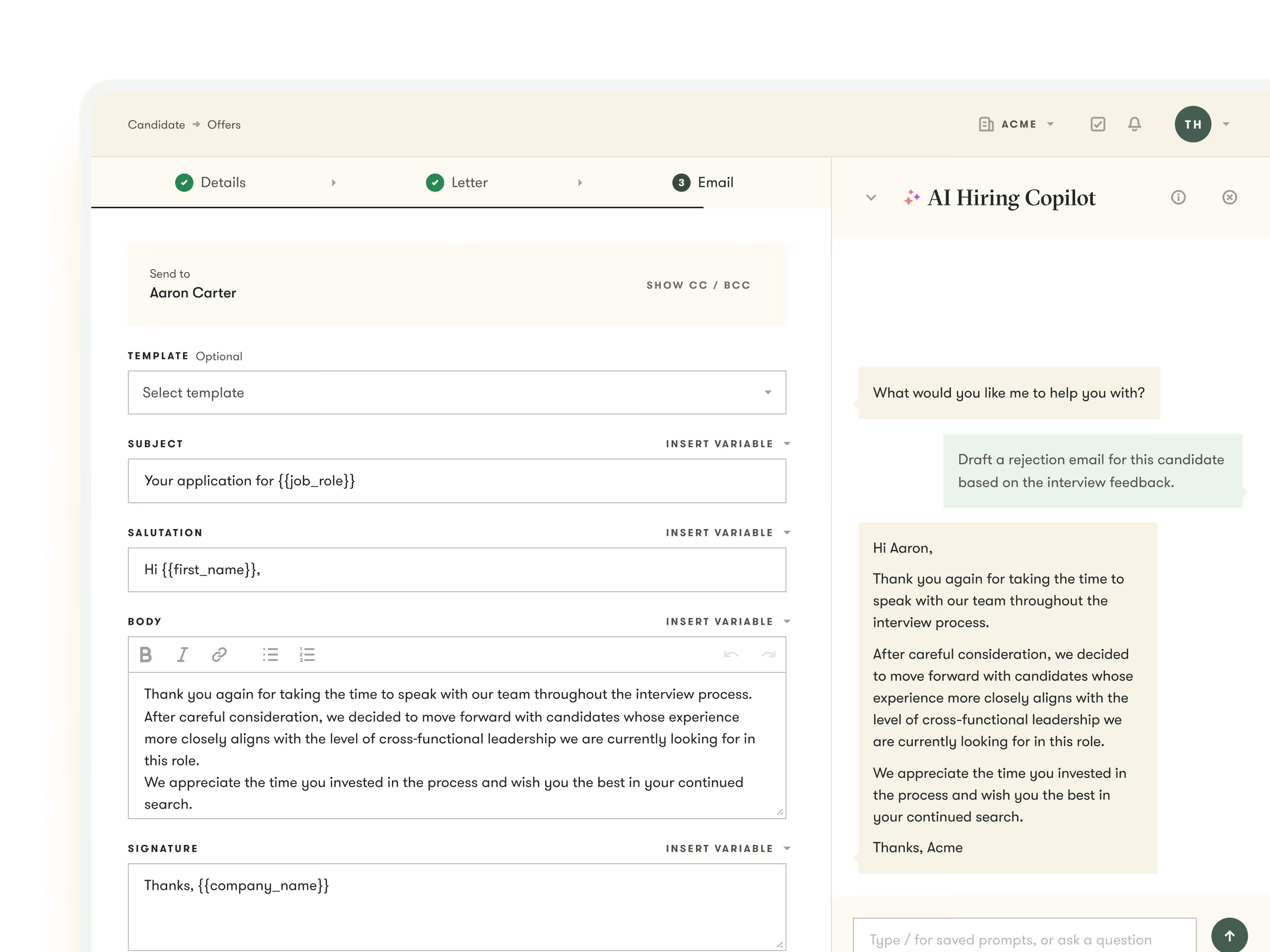
AI reads a resume and summarizes an interview, it drafts the follow-up message, and then a person decides what to do.

A human is required at every decision point. AI supports recruiters and hiring managers through the work faster. It doesn't decide who gets hired.

pinpoint ats ui example of ai hiring copilot in the platform to help make hiring easier

Driven by your input, not your history

The most legally exposed pattern in AI hiring is behavioral inference: a system that learns which candidates you've hired before, and then reproduces those patterns.

Pinpoint's AI doesn't work that way. It works from the input you give it in that moment and the data sources you point it at. It doesn't study how similar candidates moved through your funnel, and it doesn't quietly form a view of the kind of person you tend to hire. What you ask for is what you get back.

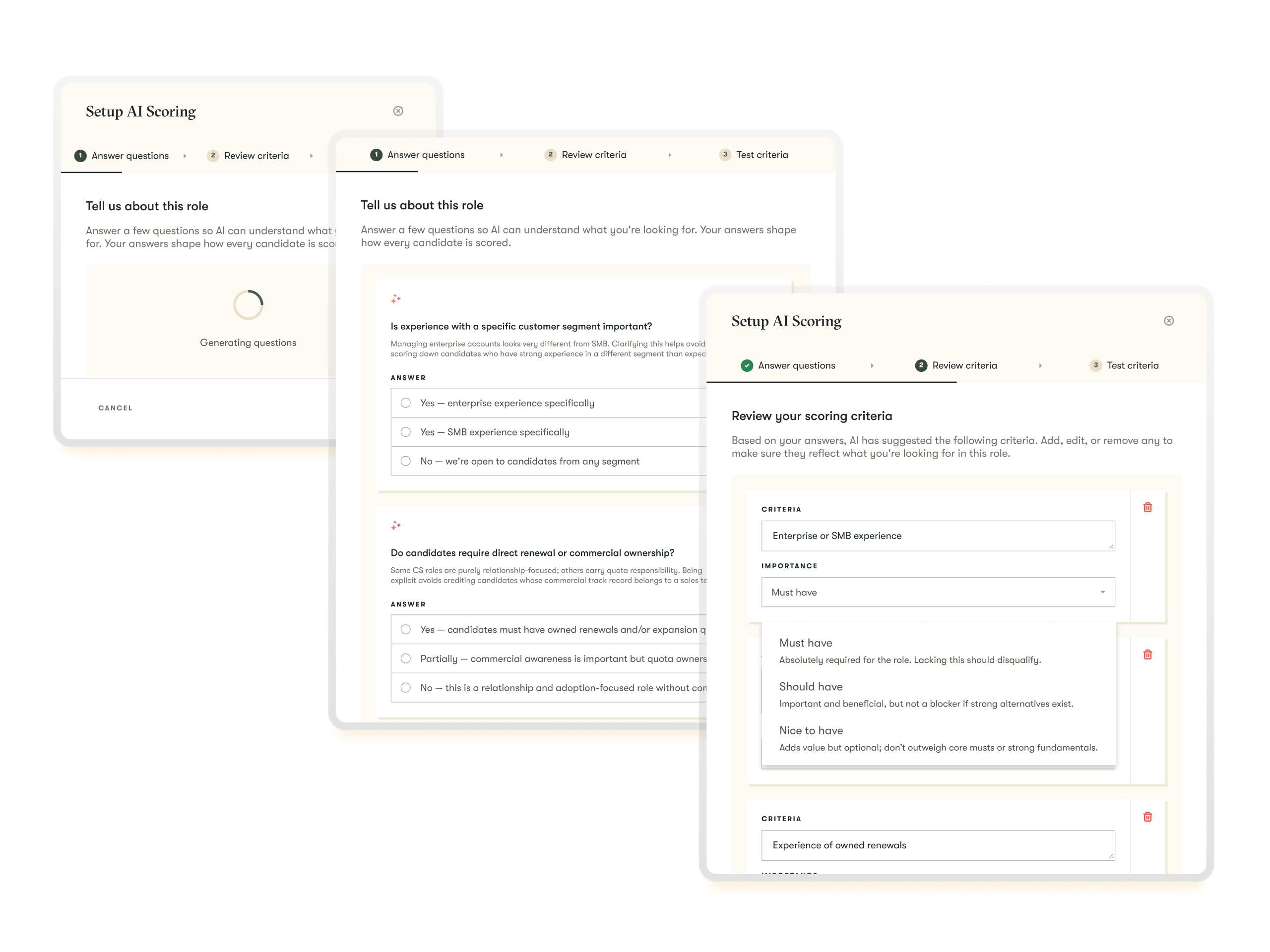
pinpoint ats ui example of ai candidate match score in the platform to help make hiring easier

If we can't explain it, we won't build it

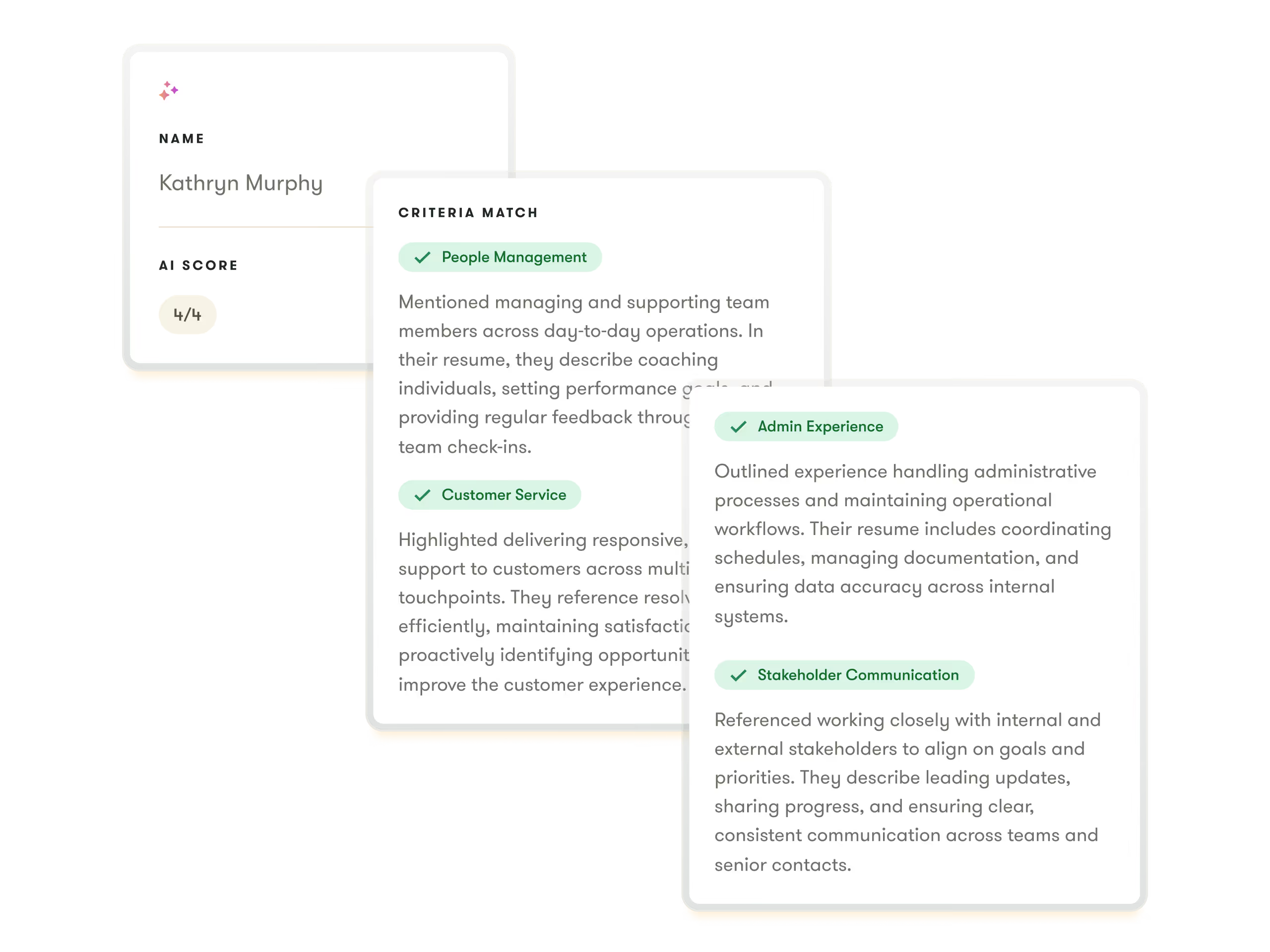
Every AI-derived suggestion in Pinpoint is transparent and auditable. When a candidate gets a match score, you can open it up and see why they scored the way they did against the criteria you set. There's no black box. If we can't make an AI output explainable, we don't build it.

pinpoint ats ui example of ai candidate match score in the platform to help make hiring easier

Your data stays yours

Your data is never used to train, fine-tune, or improve any model. AI features are opt-in, and you decide what's switched on.

AI in hiring is regulated work, and we build for it

The rules around AI in hiring are moving quickly, and they're landing on the employer and the vendor. The specifics differ, but most regulations are asking for similar themes: transparency, a human in the loop, and the ability to show how a decision was reached.

Pinpoint was built with that in mind rather than patched to meet it after the fact. A person decides at every step, suggestions are explainable and auditable, and the AI works from what you tell it rather than from patterns in your hiring history.

For the candidate-facing side, you get notifications, disclosures, and you choose what to share and when.

Pinpoint's achieved ISO 42001 certification

Pinpoint is among the first ATSs to achieve ISO 42001 certification, recognizing our commitment to responsible, ethical, and transparent AI.

See Pinpoint AI in action

Explore how AI supports your hiring process, while your team stays in control of every decision.
G2
4.8
Capterra
4.8
SSR
4.8

FAQs on our approach to AI

All uses of AI within Pinpoint are lawfully formed and respect both copyright and other 3rd party and privacy rights.

Yes, you can choose which of our AI features you want to adopt.

Yes, access to configurable AI features can be restricted based on user permissions. In these cases, there are distinct permissions for configuring vs viewing the output of the AI feature.

No. AI surfaces the insight and your people make the call. A human is required at every decision point, and the AI never decides who advances or who gets rejected. We believe there should always be a human in the loop.

No, customer data is not used for training our models.

Use it for the parts of hiring that involve reading and drafting, like making sense of a resume, summarizing an interview, or pulling together a shortlist, and keep a person on every actual decision. It works best when it's running on clean, complete hiring data, which in practice means getting the whole organization onto one system first. AI built on half your hiring data can only give you half the picture.

It can do either, depending on how it's built. The biggest risk is behavioral inference, where the system learns who you've hired before and repeats the pattern. Pinpoint is built to avoid that. Its AI works from the criteria you set in the moment rather than from your hiring history, and it supports things like anonymized screening that strip out demographic detail. Because every suggestion is explainable, you can always check the reasoning behind it.

No. It takes the repetitive reading and drafting off recruiters' plates so they can spend more time on judgment and on people. In Pinpoint, every AI output is something a person acts on, not a decision the system makes on its own.

In most places, yes, though it's increasingly regulated. Laws like New York City's Local Law 144 and the EU AI Act set requirements around bias auditing, candidate notice, and human oversight. Requirements vary by region, so check what applies where you hire.