Candidate profiles
Everything you need to know about a candidate in one location
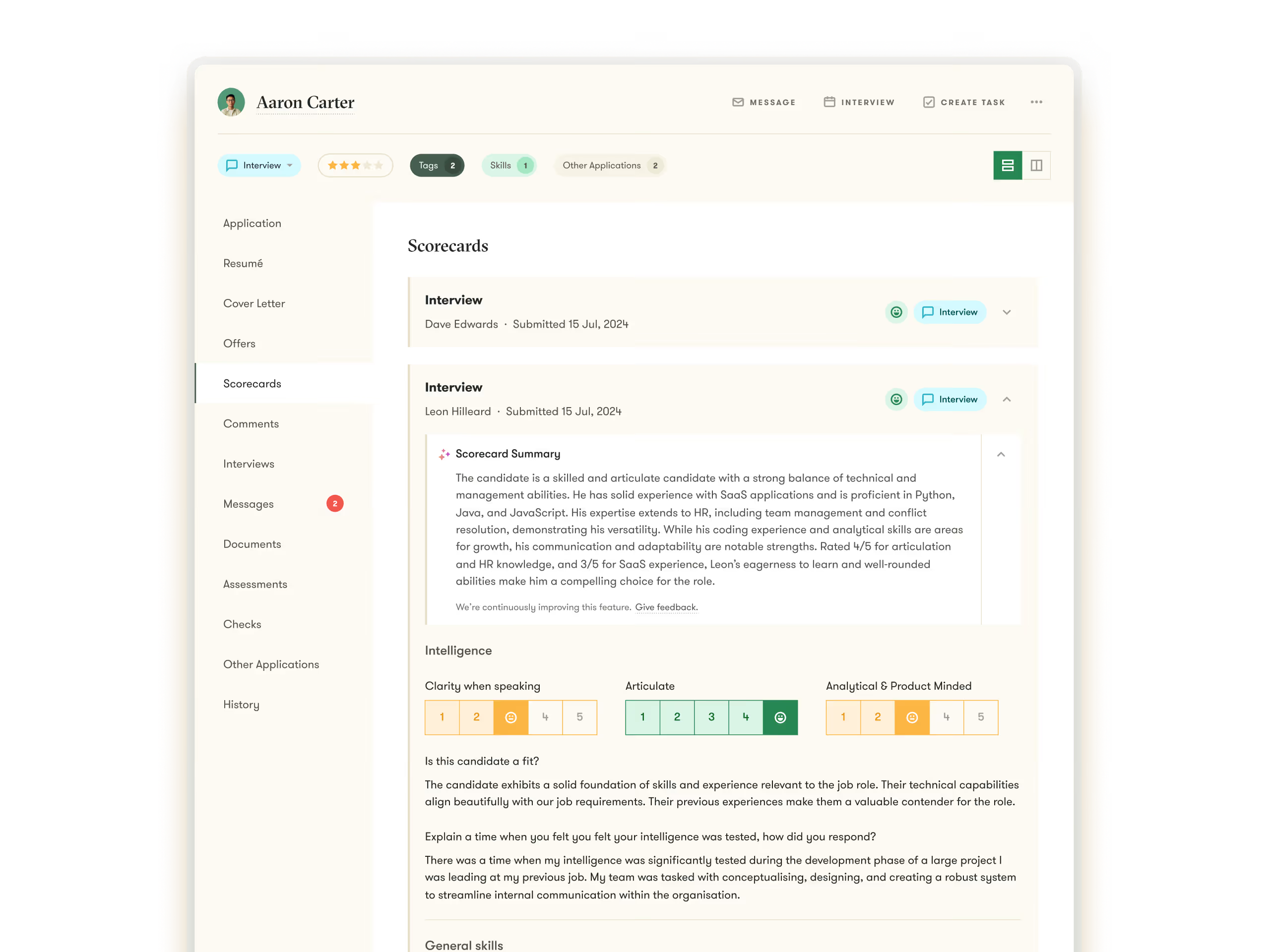
Easily search candidate profiles then surface their whole history including applications, summary, résumé, hiring team feedback, and communication history.
Easily search candidate profiles then surface their whole history including applications, summary, résumé, hiring team feedback, and communication history.


Each candidate has a single record that brings together all their applications, interactions, and feedback. View them in the context of a specific role, or step back and see the full picture, without switching tools.
Every candidate profile follows the same layout. You can review their application, read their resumé, scan a summary of their experience, and see their full history without jumping between tabs or tools. That consistency makes it easier to compare candidates and move quickly when you’re reviewing at volume.

Bring together all the information you have about a candidate and present it consistently in a single, simple view. Review applications, download original resumés, generate summaries of their qualifications, and see the history of every interaction.

AI-generated scores, in-depth scorecards, and team comments make it easy to understand candidate fit and gather feedback from hiring teams.
Keep email communications out of your inbox. Anyone on your team can see a full history of candidate communications. Customizable, personalized templates make keeping in touch with candidates a breeze.















































reduction in time to hire
casting day coordination
candidate communication

candidate engagement
candidate trust
reliance on paid ads

risk of candidates stalling
visibility for TA leaders and stakeholders
employees supported in the states

visibility on all candidates
locations supported
hiring manager adoption


In Pinpoint, a good candidate profile brings together everything your team needs to make a decision in one structured view. That includes the original application and résumé, a summary of the candidate's experience, structured scorecard feedback from the hiring team, and a full history of every email and message exchanged.
The key is consistency. When every profile follows the same layout, your hiring team knows exactly where to find information, whether they're reviewing five candidates or 50. There's no hunting for context or interpreting different formats. Profiles that are well organized reduce cognitive load, make comparisons easier, and help teams move faster without missing anything important.
In many systems, candidate data still ends up scattered. Feedback lives in email or Slack, résumés are stored separately, and communication history sits in personal inboxes. Even with an ATS in place, teams often have to piece together a candidate's history from multiple sources.
This creates delays and inconsistencies. Hiring managers make decisions without full context, recruiters spend time chasing feedback, and strong candidates get overlooked because key information wasn't visible at the right moment. Pinpoint solves this by centralizing everything on the candidate profile. Scorecard feedback, email replies, and application history all live in one place, accessible to your whole team, so no one has to chase information down.
Pinpoint's candidate profiles give every stakeholder access to the same information in the same format. Instead of relying on memory or fragmented notes, your hiring team can review structured scorecard feedback, compare candidates side by side on the Scorecard Ratings page, and see the full interaction history in one place.
This leads to more consistent evaluations and fewer rushed decisions. When feedback is captured in a structured way and visible to everyone, it's easier to spot patterns, challenge assumptions, and align on the right outcome for the role. With Pinpoint's AI-generated scorecard summaries, hiring managers can also get the gist of each reviewer's feedback quickly, without reading through every comment.
The most effective approach is to capture feedback directly on the candidate profile using Pinpoint's scorecards. Each reviewer fills in a scorecard independently, scoring metrics on a 1 to 5 scale, answering questions, and leaving notes. Everything is tied to the candidate and visible to the whole hiring team once submitted.
When feedback is left in email threads or external tools, it's easy to lose or overlook. Storing it in Pinpoint means you can compare candidates side by side on the Scorecard Ratings page, track decisions over time, and keep a consistent evaluation process across roles and teams. If your company has the Scorecard Summary setting turned on, Pinpoint also generates an AI summary and sentiment indicator for each submitted scorecard, so it's faster to scan key takeaways at a glance.
Pinpoint supports keyword search, predefined filters, and Boolean strings. Keyword search helps you quickly find relevant experience, filters narrow results by criteria like stage, location, or tags, and Boolean lets you run precise, multi-condition queries across your candidate data.
What matters just as much is scope. In Pinpoint, you can search within an individual job, within your Talent Pipeline, or across your entire candidate database. So when a new role opens, you can surface people who applied previously and were a strong fit, without starting over. This reduces time to hire and helps your team get more value from the pipeline you've already built.
Consistency removes friction from the review process. In Pinpoint, every profile is structured the same way, so your hiring team knows exactly where to find key information, whether they're reviewing 50 candidates or 500.
Without that structure, teams spend time interpreting different formats rather than assessing candidates. It also makes comparisons harder, which can lead to weaker or less confident decisions. A consistent profile layout creates a shared standard for evaluation across the entire hiring process.
Pinpoint's centralized profiles make collaboration much simpler. Recruiters, hiring managers, and interviewers can all submit scorecard feedback, review previous comments, and see the full communication history without switching tools. Email replies from candidates are automatically pulled into the candidate's profile, so everyone's working from the same picture.
This reduces back-and-forth, avoids duplicate work, and keeps decisions grounded in shared context. It also means hiring can continue smoothly if someone is out of office or leaves the business, since nothing is tied to an individual inbox or document.
In Pinpoint, two-way email is built directly into the platform. Every message sent to a candidate is logged on their profile, along with replies and a record of who sent what and when. Communication never lives in a personal inbox.
This context is critical for maintaining a good candidate experience. It prevents duplicate or conflicting messages, makes it easy for someone else to pick up a conversation, and ensures candidates don't feel like they're being handled by disconnected parts of a team. You can send messages using prepopulated templates or customize each one as needed.
Pinpoint's anonymized screening removes identifying details from candidate profiles during early-stage review. It automatically strips name, contact information, source information, and gender pronouns from applications, and redacts the résumé so assessors can focus on experience, skills, and qualifications instead. You can also configure whether education history is redacted or left visible. A candidate's full details are only revealed once they've been invited to and accepted an interview.
It's most useful at the top of the funnel, where initial decisions are made quickly, and the risk of bias is highest. Standardizing the information visible at that stage helps your team make fairer, more consistent first-stage decisions without changing the candidate's experience.
Candidate profiles in Pinpoint aren't just for active roles. Every application, scorecard, and piece of feedback builds a richer record over time, and that record stays searchable.
Pinpoint's Talent Pipeline lets you take this further. You can move strong candidates from a closed role directly into the pipeline, invite them to register their interest for future opportunities, and create talent pools that automatically filter by skills, location, and tags. When a new role opens, you can search across your full candidate history using keywords, filters, and Boolean strings to surface the right people quickly. This reduces reliance on external sourcing, shortens time to hire, and helps your team build a more proactive approach to recruitment.