


How to build better reports for your boss
The best recruiting reports don't just show data. They tell a story that moves people to act.

Article
5 min
December 20, 2023
The best recruiting reports don't just show data. They tell a story that moves people to act.

Data is only as helpful as the action it informs.
I’ll always remember the buzz of activity right after an organization goes live with automated recruiting analytics for the first time. There’s a flood of new information and leaders are eager to dive in. But it creates a new challenge: how to make meaning of the data for stakeholders, like the head of recruiting and the business leaders they report into.
The best recruiting professionals are proactive in thinking through what information their bosses need to know, beyond simply fulfilling their report requests. To do this, you’ll want to ask yourself what is most useful to your leaders, what kinds of decisions they are (or should be) making, and how data can inform their strategy.
Many leaders may not know what kind of data they should be looking at. These moments are an opportunity to build trust and lead the conversation by offering up the data you think is most important and the recommended actions.
“Board-level directors know they want data, but they don't know what data they want. It's incumbent on the HR and TA functions to educate.”
Ben Donovan-Aitken
Chief Delivery Officer, Instant Impact
Business leaders will be looking for higher level data than what recruiters look at day to day. They want to understand the big picture and anticipate future problems. For example:
Leaders are often toggling between two different guiding questions:
Reports can guide an organization’s planning and provide visibility into the current state. But in either case, “data is not useful unless you can interpret it,” says Pinpoint CEO Tom Hacquoil.
When sharing reports with leaders, it is important to also recommend actions alongside the data. For example, Pinpoint’s Talent Team typically fills any role in 90 days or less, so we’ve used that data to set the expectation across the company that hiring managers should submit their information for open roles at least one quarter in advance.
To help you get started, we’re sharing the top 3 reports recommended for heads of recruiting teams and their leaders, along with tips for interpreting the data to drive action.
“The better skilled we make our hiring managers and the easier we make it for them to engage with the hiring process with technology, that’s the watershed moment where there becomes less friction in processes.”
Ben Donovan-Aitken
Chief Delivery Officer, Instant Impact
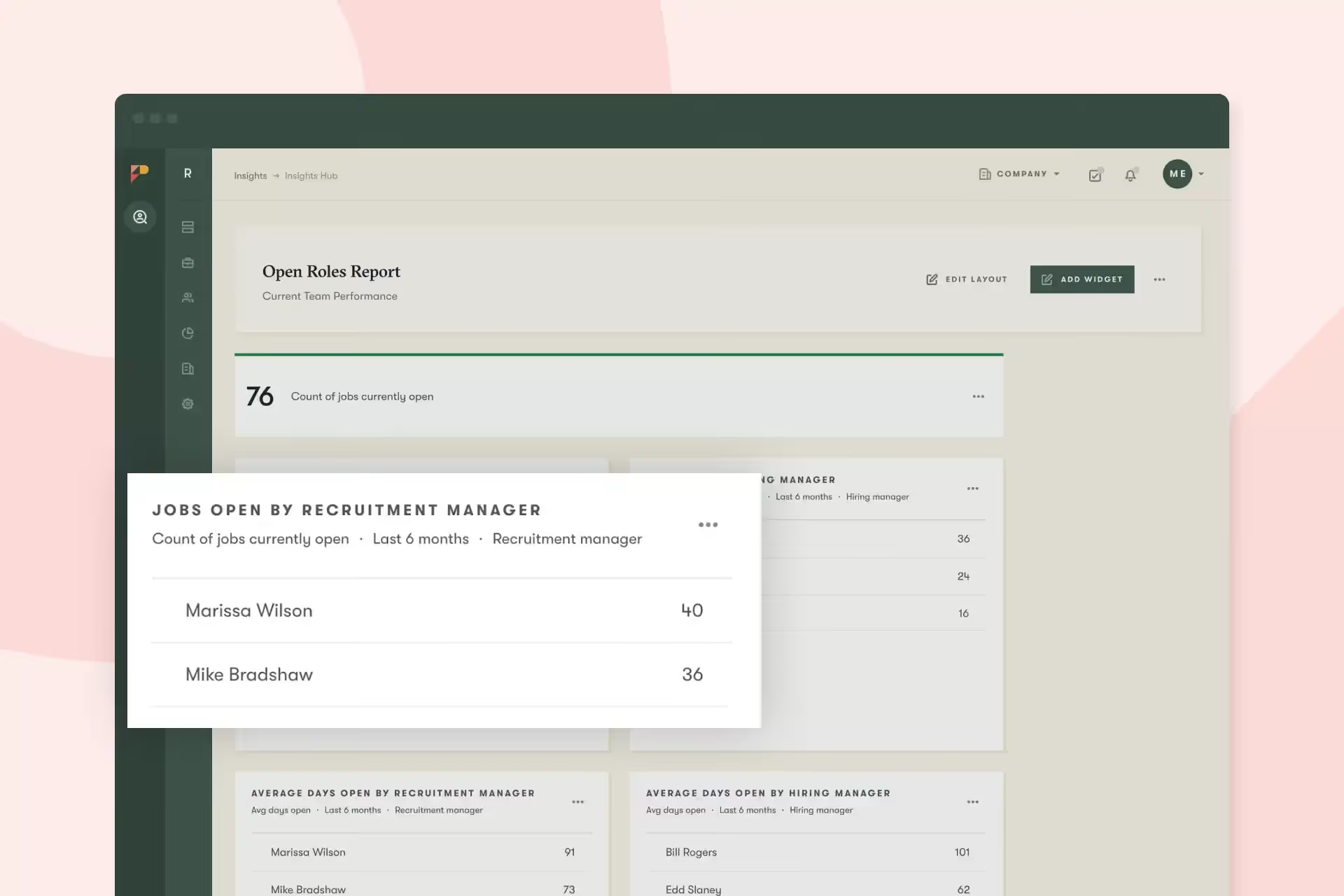


As someone who has been a part of building out recruiting analytics from scratch at multiple organizations, I’ll be the first to admit it’s a marathon not a sprint. Once you have the foundational technology in place, it can be daunting to choose from the nearly infinite number of reports that can be created and analyzed. But if you start with what matters to your leaders most, you’ll soon discover how impactful the right data can be.
Watch Pinpoint CEO Tom Hacquoil in conversation with Ben Donovan-Aitken, Chief Delivery Officer at Instant Impact, as they discuss how recruiters can use data to provide valuable insights and build better reports that speak to business leaders.
Part 1
How to build a recruiter performance report
Part 3
4 steps to get team buy-in for a new reporting system
With over seven years in B2B SaaS, Alice creates data-driven content that makes complex topics simple and engaging. She believes every good story (no matter how dry or technical) should feel human, useful, and built on insight.